Lithium-sulfur batteries built for flight.

Ghove Energy is a Monash University spin-off developing lightweight lithium-sulfur batteries in Australia, starting with drones, where every gram counts.

Every drone is a flying battery.

More energy stored at the same battery weight means longer flights or heavier payloads. Today’s advanced lithium-ion cells rely on nickel and cobalt, and their weight limits how far an electric aircraft can fly and how much it can carry.

Lithium-sulfur chemistry can store more energy per kilogram while avoiding nickel and cobalt altogether. Ghove’s engineered sulfur cathode has reached 330 Wh/kg in a published research pouch cell (Advanced Energy Materials, 2022), and Ghove brings a decade of lithium-sulfur research and a cell-wide IP portfolio to building reproducible cells and packs in Australia.

About Ghove
Drones first

Australia’s vast distances and dispersed communities make drones especially useful for:

  • Emergency response
  • Remote operations
  • National security
Next

Other weight-sensitive electrification markets

Three inventions, one battery to build.

Each invention has been demonstrated separately in published research pouch cells. Ghove is now integrating all three into one reproducible, manufacturable cell, then into packs for drones.

  1. Engineered sulfur cathode

    330Wh/kg

    Higher specific energy, with 480 Wh/L volumetric energy, in an energy-optimised pouch cell.

  2. Rationally designed separator

    100cycles

    Longer life: 100 pouch-cell cycles at 202 Wh/kg in a durability-optimised pouch cell.

  3. Catalytic binder

    ~2 → ~1hours

    Faster energy delivery: similar energy, with discharge time cut from about 112 minutes (0.3C, 2024) to about 57 minutes (0.5C, 2026), defined on theoretical sulfur capacity.

  4. One cell

    Integration target

    Each invention has been demonstrated in its own research pouch cell. The work now is integration: cathode, separator and binder in one reproducible, manufacturable lithium-sulfur cell.

  5. Drone battery packs

    Planned

    Integrated cells assembled into drone battery packs, engineered around real drone requirements.

  6. Flight

    Planned

    Next: pack safety testing, then flight validation against today’s drone batteries.

Cell to pack to flightAn exploded lithium-sulfur pouch cell: casing, lithium anode, Ghove’s separator, and Ghove’s sulfur cathode with its catalytic binder. The layers integrate into one cell, which is wired into a four-cell drone battery pack that powers a drone.Pouch casingSulfur cathode330 Wh/kg+ catalytic binder~2 → ~1 hSeparator100 cyclesLithium anodePouch casingOne cellIntegration targetDrone packFlight
Explore the technology

The team turning inventions into a product.

Three founders spanning lithium-sulfur invention, battery engineering and industrial scale-up, backed by Monash Innovation Labs.

  • Portrait of Prof. Mainak Majumder

    Prof. Mainak Majumder

    Co-founder · Technology invention & ventures

    Lead inventor of Ghove’s lithium-sulfur battery technology. Co-founder of three deep-tech companies.

  • Portrait of Assoc. Prof. Mahdokht Shaibani

    Assoc. Prof. Mahdokht Shaibani

    Co-founder · Li-S battery R&D & integration

    More than ten years of lithium-sulfur battery research and development. 2021 L’Oréal-UNESCO Fellow, recognised for advocating a sovereign Australian battery supply chain.

  • Portrait of Prof. Matthew Hill

    Prof. Matthew Hill

    Co-founder · Industrial translation & scale-up

    More than 18 years of materials scale-up and research translation at CSIRO. Recipient of the 2014 Malcolm McIntosh Prize for Physical Scientist of the Year, one of the Prime Minister’s Prizes for Science.

Meet the team

Backed by Monash Innovation Labs.

Ghove is a Monash University spin-off, working with Monash expertise and infrastructure in Clayton, Victoria.

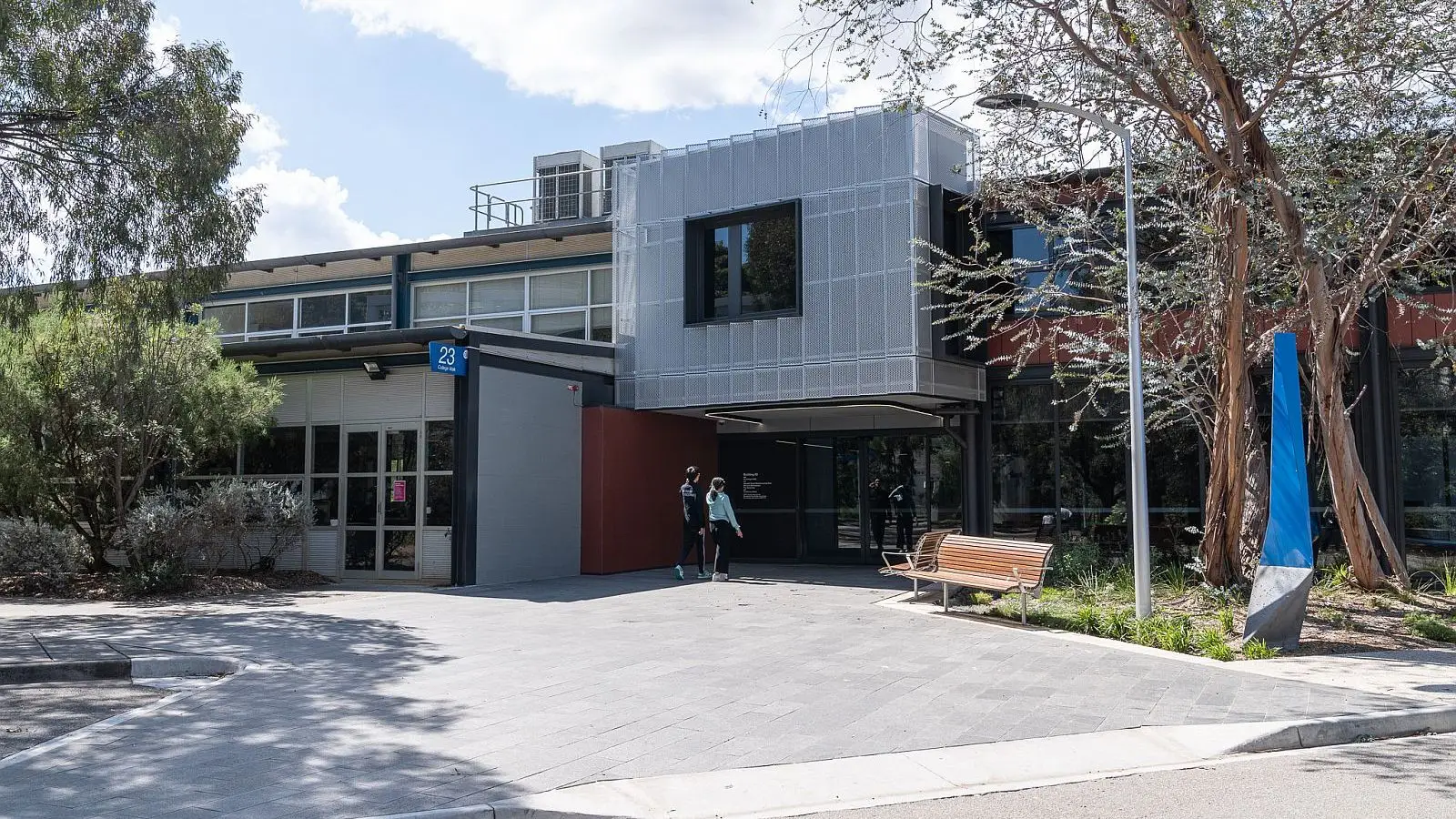
The Monash Innovation Labs building in Clayton, Victoria: a two-storey building with a metal-clad upper level among eucalypts.
Monash Innovation Labs Clayton, Victoria

Ghove’s partners.

Ghove Energy partners and what they do
PartnerWhat they do
Monash UniversityOne of Australia’s Group of Eight research universities, founded in 1958, with its largest campus at Clayton, Victoria. Its Monash Innovation Labs bring businesses, researchers and students together in smart manufacturing, processing and analytical labs.
Net Zero StackA Melbourne-based platform for net zero innovation, taking sustainable technologies from research to commercialisation. Its projects span carbon capture, energy storage and resource recovery from waste.

What Ghove offers

Lithium-sulfur cells (in development) and drone battery packs (planned), designed around real mission requirements. Next: battery pack evaluations with drone manufacturers, with qualification to follow.